Squid Fishing on Chesil Beach: How It All Started and Why the Jigs Matter
When the nights draw in and most anglers hang up their rods, that’s when things start to get interesting on Chesil Beach.
This stretch of shingle from Portland to West Bay becomes home to one of my favourite challenges — squid fishing.
It’s visual, technical, unpredictable, and completely addictive.
And it’s the reason I started designing my own Saltwater Angling squid jigs, built specifically for this beach.
Why Chesil Is So Special for Squid Fishing
Chesil is unlike anywhere else. It’s deep, shingly, and stretches for miles, with sudden drops and shifting tides.
When the water is clear, squid patrol right up to the ledge, hunting baitfish under the cover of darkness.
The most common spots are Portland, Ferrybridge, Abbotsbury, and West Bexington, but truthfully, the squid can show anywhere along the beach if the conditions line up.
If you find clear water, light surf, and an offshore wind — you’re in the game.
When the Season Starts
While most anglers think of squid season as starting in autumn, it can begin as early as late July, with August often marking the first consistent catches.
From there, numbers build steadily through September and October as the water clears and temperatures stabilise.
Squid grow rapidly — often doubling in size within weeks — and by late November, it’s not unusual to find individuals weighing several pounds.
This makes the later part of the season particularly exciting, especially when the big ones move tight to the shore under cover of darkness.
How the Original Range Was Born
When I first started squid fishing Chesil, I realised most jigs on the market weren’t quite right for our coastline.
They were either too light, too buoyant, or designed for calm harbours in Japan — not a steep, surfy beach with wind, current, and swell.
So, I began designing my own.
The goal was simple: create a jig that could be cast further, sink predictably, and still move naturally in rougher water.
That’s where the Saltwater Angling Original Range came from — durable, distance-weighted, reflective, and balanced for the drop-offs and shingle shelves of Chesil.
Each one is heavier than standard EGI jigs, with custom-tuned weighting to give longer casts and a controlled fall — perfect for the long, sloping Chesil banks.
And because night sessions dominate the season, every jig was designed to work under glow light setups for better visibility.
Evolving the Design – The Glow Series
After a few seasons of testing and feedback, I wanted to push things further.
That’s how the Glow Series was born — an evolution of the original concept with new materials, higher reflectivity, and built-in glow cores designed for clarity and distance fishing.
Each colour variant was developed for a specific set of conditions:
-
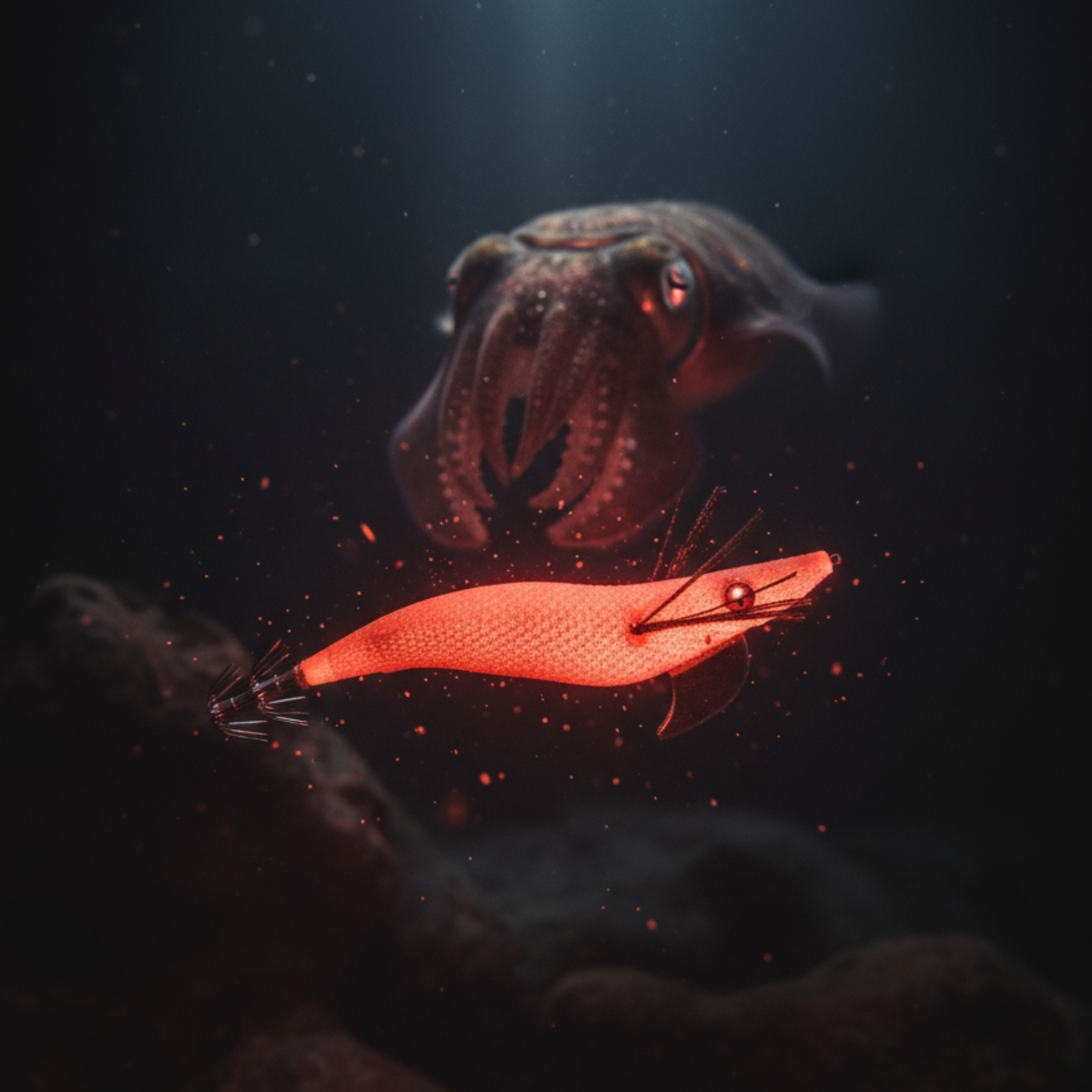
Inferno (Red Glow): For dark nights or slightly coloured water — strong contrast and deep visibility.
-
Volt (Blue Glow): Clear, calm nights — sharp, electric visibility in pristine water.
-
Venom (Green Glow): Slightly murky or moonlit conditions — vibrant and balanced.
-
Abyss (Purple Glow): Subtle and stealthy — perfect when the squid are cautious or pressure is high.
Every detail was fine-tuned through real sessions on Chesil — not lab tests, but nights on the shingle, in the wind, with spray on your face.
How and When to Fish for Squid on Chesil
You can start targeting squid from late July onwards, with the best fishing through August to early December.
Aim for calm, clear nights — especially around high tide — and avoid coloured water after a blow.
A longer EGI setup helps, especially when reaching the deeper channels.
Work the jig with a steady rhythm — two sharp lifts and a controlled drop. Most takes come on the pause, so keep your line semi-tight and ready.
If it’s overcast or glassy calm, don’t be afraid to fish in daylight — I’ve caught squid in full sun at Abbotsbury when the water’s clear enough.
Safety and Setup
Chesil is beautiful but demanding. Always check the tides, swell, and wind before heading out.
Wear decent boots, use a headtorch with a red filter, and fish from dry shingle. The slope can shift quickly on a rising tide.
Keep spare glow sticks handy — they make a big difference when tracking your jig at night.
The Species You’ll Catch
The main squid species caught around the Dorset coast and wider UK waters are Veined Squid (Loligo forbesii) and European Squid (Loligo vulgaris).
Both are fast-growing, short-lived predators that move inshore seasonally to feed and spawn — which is why we see them so consistently off Chesil.
Veined Squid (Loligo forbesii) is the most commonly caught and commercially important species in UK waters, while European Squid (Loligo vulgaris) tends to be more frequent in the southern English Channel and slightly warmer conditions.
How to Tell Them Apart
-
European Squid: Has two central rows of large suckers on its tentacular club.
-
Veined Squid: Has suckers of all the same size on the tentacular club.
In practice, both species behave similarly and fight surprisingly hard — and when they’re feeding close to the beach, the action can be fast and furious.
Why I Keep Coming Back
There’s something magical about watching that faint glow pulse beneath the surface before a shadow darts in and the rod tip kicks over.
It’s not just about catching — it’s the challenge, the quiet, and the reward of fishing a beach that’s alive long after dark.
And for me, designing the jigs that make it all possible is part of that same journey.
Each one started right here — on Chesil, under the red glow of a headtorch, chasing the next strike.
